| Applying the Mineral Ground -- Part II |
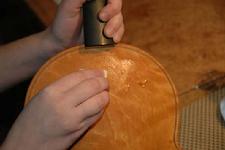
6. Apply the
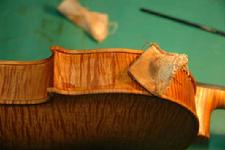
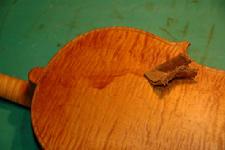
clear mineral ground to the top using a durable fabric such as canvas. Working in quadrants, rub the ground into the
wood so that the pumice completely seals the pores.
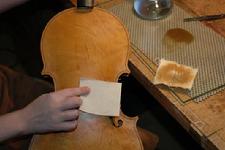
7. Allow the
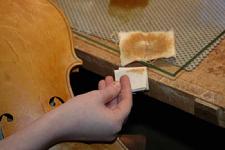
ground to sit on the surface of the wood for 5 to 10 minutes allowing it to penetrate the wood. This is why you don't want the mineral too thin, as that allows too much varnish to soak in. Next wipe off any
remaining ground using a cleaner piece of canvas.
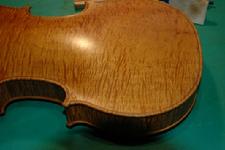
The wood will take on a burnished sheen and no more varnish will come
off on the canvas. Two coats of this process (with drying time between coats) may be necessary to reach the right finish and patina.
|
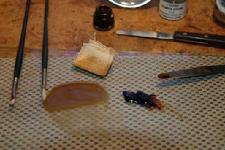
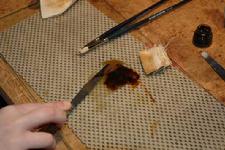
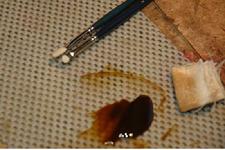
8. Mix up
ground to apply to the rest of the instrument.
Using the leftover clear ground, add a small amount of colored
varnish. Be sure not to use too much
color (especially on the first coat) or the wood will burn. If necessary, mix in more pumice as described
previously.
|
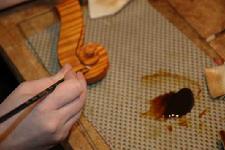
9. To apply the
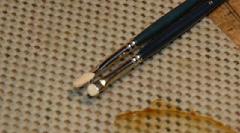
ground to the overhang and the scroll, use a stiff-bristled filbert brush. The abrasiveness of the pumice will eat up
the bristles quickly, so do not use your most expensive brush!
|
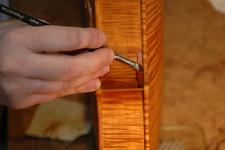
10. Apply ground
to the rest of the instrument with canvas, as described previously. When properly applied the finish should be completely sealed and the wood protected from even the most intense colored varnish from "burning" it. The interesting thing about this process is that you won't see any thickness or body to this sealed coating of mineral ground. Also, with the right mixture and selection of mineral, you are applying a protective coating should the varnish wear or be artificially worn!
11. Allow to dry in a light box or in direct sunlight for 24-48 hours. We prefer to alternate time in the light box with equal time in the sun.
|
|